Sidewalk Closed? How to Master Pedestrian Control and Avoid Permit Delays

123 TCP • September 10, 2026

Share this article

Toy cars and road signs around a sketchbook with a pencil on a blue background

For crews working in the field, closing a sidewalk is almost always the easiest and most preferred option. But for city reviewers, the Pedestrian Control element of a Traffic Control Plan (TCP) is one of the most common reasons they reject a first draft.


Increasingly, municipalities are prioritizing pedestrian access over vehicular access. When your worksite absolutely must occupy the sidewalk area, you can't just throw up a "Sidewalk Closed" sign and hope for the best.


As Adam Freeland recently noted in a LinkedIn industry breakdown:

 "The Pedestrian Control element of a Traffic Control Plan (TCP) is one of the most common reasons agencies request revisions instead of approving the first draft... In worksites that physically must occupy the sidewalk area, this prioritization often plays out in the form of a Pedestrian Diversion, where pedestrians are rerouted away from the sidewalk."

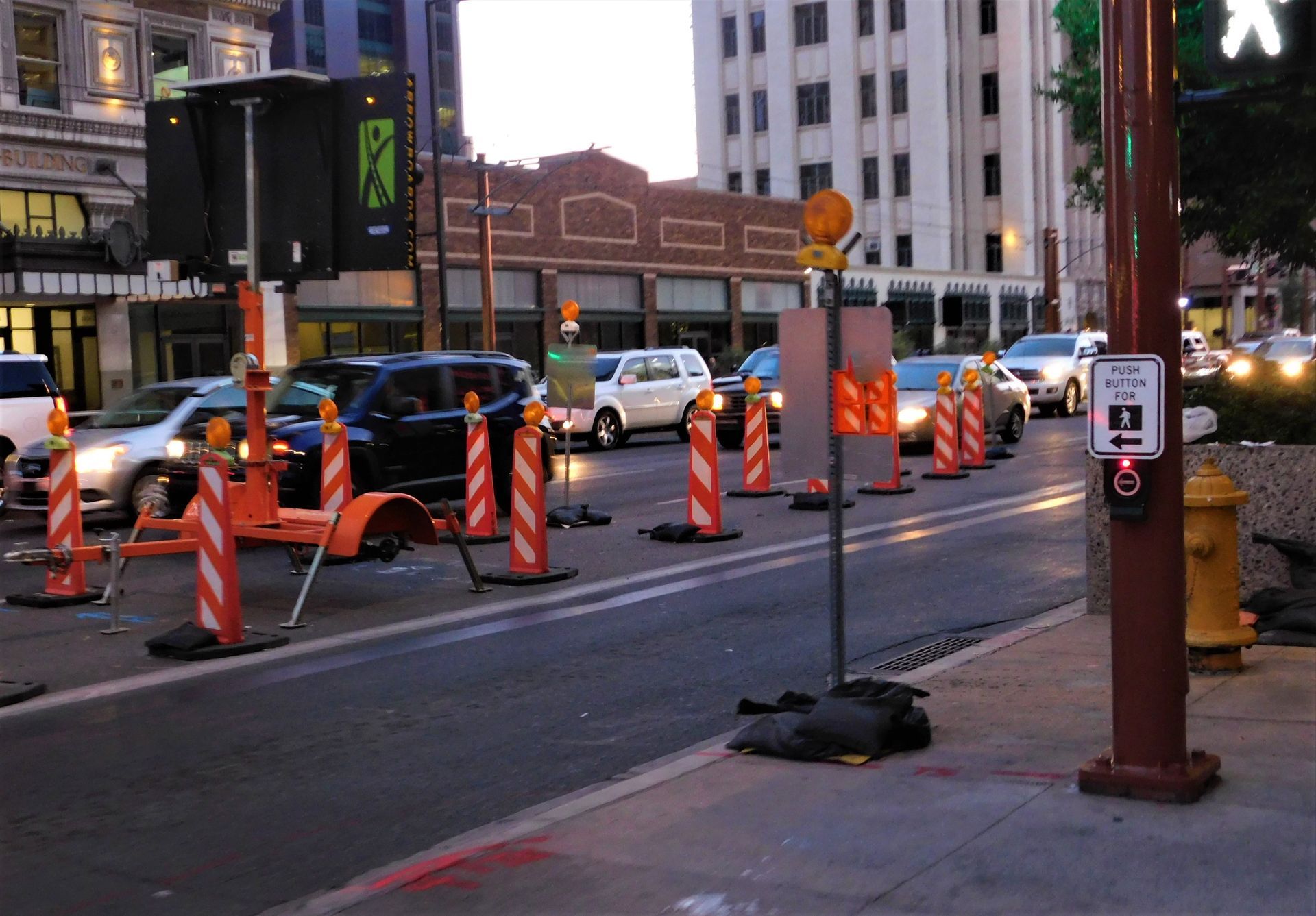
Depending on the situation, it is most common to route pedestrians into a parking lane, a traveled lane, or occasionally through a safe path within the worksite itself.

 K-Rail vs. ADA Barricades

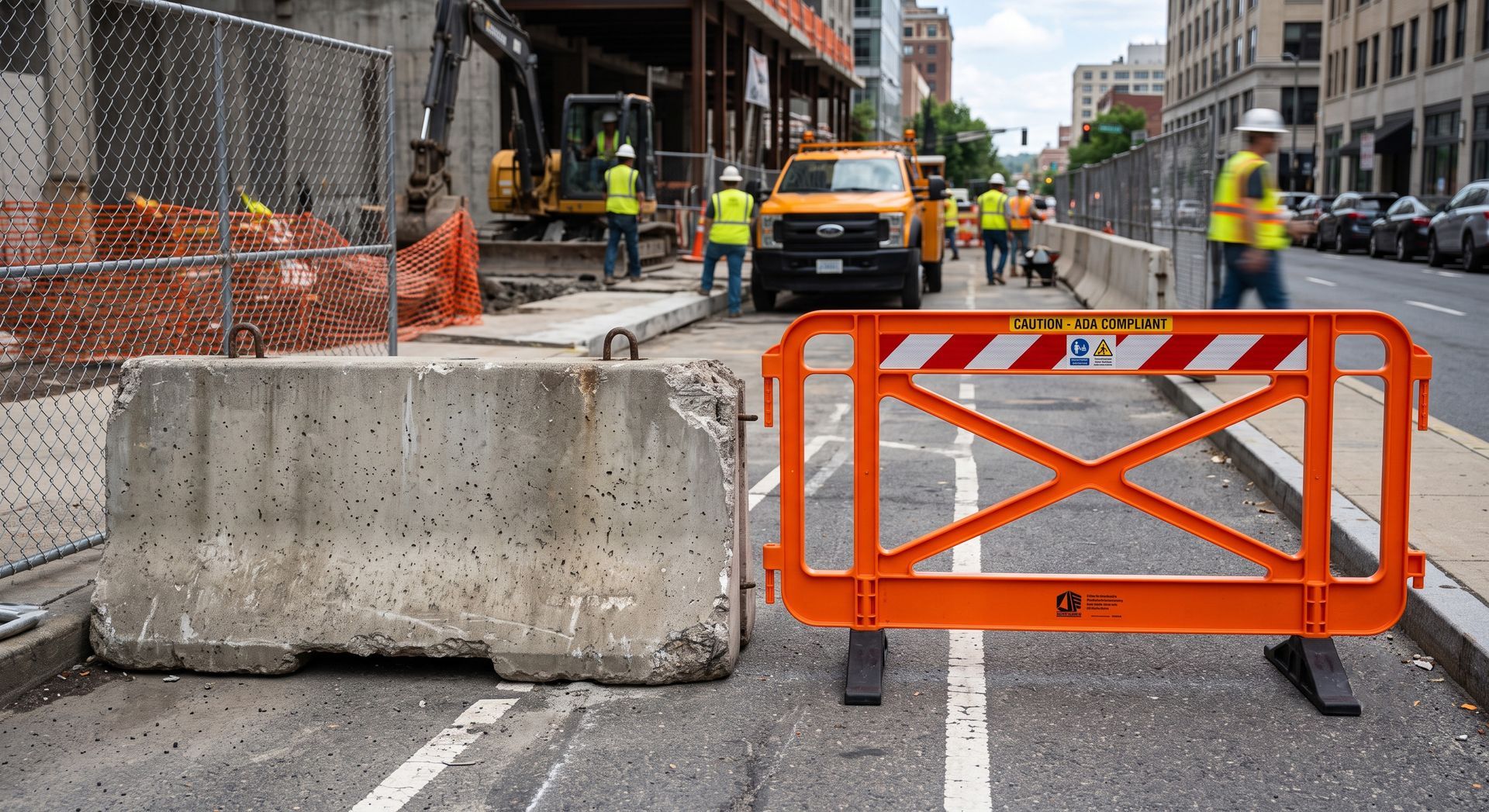
Street construction site with concrete barriers and an orange road barricade blocking a lane

When routing pedestrians into a live parking or travel lane, how you delineate that path is critical.


A positive redirection barrier, like a concrete K-Rail, is often preferable from a sheer safety standpoint because it provides maximum physical protection. However, many high-density jurisdictions—where every inch of road width comes at a premium—strictly prohibit K-Rails. Instead, they insist on non-redirective barriers that occupy a significantly smaller footprint, such as ADA-compliant pedestrian barricades.


Understanding the localized pedestrian priorities of the city reviewing your TCP is the only way to draft exactly what they are looking for right from the start. Guessing the wrong barrier type for your specific city is a guaranteed way to get your TCP kicked back with red-lines.

Avoid the Red-Lines with 123TCP

That is exactly how 123TCP helps you bypass the municipal red tape.


  • Direct-to-Drafter Expertise: We connect you directly with skilled, locally experienced drafters who already know if your municipality demands K-Rails or ADA barricades. We get it right the first time to minimize the chances of a resubmission.

  • No Upsells: We know you just want your permit approved so you can get to work. Because we strictly focus on professional plan drafting, we will never use a pedestrian diversion as an excuse to upsell you on renting expensive physical barricades, K-Rails, or on-site flaggers.

  • Built for Speed: Already behind schedule because a city reviewer rejected your sidewalk closure? We offer expedited turnaround options to get your compliant plan drafted, submitted, and approved fast.


Don't let a pedestrian detour derail your timeline. Connect directly with a professional drafter who knows your city's exact rules today.


Get Plans Now

Frequently Asked Questions

  • What is a Pedestrian Diversion in a Traffic Control Plan?

    When a construction project or excavation physically blocks a city sidewalk, a Pedestrian Diversion is used to safely reroute foot traffic around the worksite. Because many municipalities prioritize pedestrian access over vehicular flow, these diversions often route people into a parking lane or a traveled lane using compliant physical barriers.

  • When do I need to use a K-Rail vs. an ADA barricade for pedestrian control?

    The right barrier depends entirely on your specific municipality. A concrete K-Rail provides maximum physical protection and positive redirection, but many high-density cities ban them because they take up too much road space. In those areas, compact, ADA-compliant pedestrian barricades are required. Hiring a locally experienced drafter through 123TCP ensures you specify the exact barrier your city reviewer expects.

  • Why did the city reject the pedestrian control element of my TCP?

    Cities frequently kick back first-draft TCPs if the plan attempts to close a sidewalk without providing an adequate detour, or if the contractor specifies the wrong type of physical barrier for the pedestrian path. Connecting directly with a skilled drafter helps you avoid these costly revision cycles and gets your encroachment permit approved faster.

  • Will 123TCP try to rent me K-Rails or ADA barricades after drafting my plan?

    Never. Traditional traffic control companies often use the drafting process to bundle unwanted services or upsell you on renting expensive physical barricades, cones, or on-site flaggers. At 123TCP, our direct-to-drafter marketplace focuses strictly on professional plan drafting to keep your budget intact.

  • My project is stalled waiting on a sidewalk closure permit. How fast can I get a revised TCP?

    We know that waiting on municipal red tape means your machinery and crew are standing idle. 123TCP offers expedited turnaround options to get your compliant plan drafted, submitted, and approved as quickly as possible.

Recent Posts

Aerial view of a suburban four-way intersection with houses, trees, lawns, and parked cars.
By 123 TCP August 31, 2026
Need a Traffic Control Plan for public right-of-way on private property? Learn how to navigate double the red tape, avoid delays, and get your TCP approved fast.

Worker in reflective gear walking on wet pavement carrying two orange traffic cones
By 123 TCP August 16, 2026
Learn when to use lane shifting instead of full closures for your next construction project. Discover how proper taper lengths save time and flagging costs.

Toy cars and road signs surrounding a sketchpad with a drawn intersection on a blue background
By 123 TCP August 4, 2026
Stalled by municipal permit red tape? Discover who your Traffic Control Plan is really for, avoid costly revision cycles, and get approved faster with 123TCP.